


"Trust the Science", by Kevin Diehl
- Matt Nee
- Aug 22, 2025
- 8 min read
Do you remember during the pandemic when we were told time and again to “trust the science?” Those words were meant to be both reassuring and, in a firm manner, admonish us not to listen to any other information about the origins, effects or treatments of Covid that were not from the “accepted” scientific community. The implication, of course, was that “science” was some infallible, unimpeachable entity that could not be influenced by politics, personalities or current events.
If only that were true. While “science,” properly understood, is in fact dispassionate and generally universal, the “practice of science” is conducted by humans, who are subject to all the biases, foibles, corruption and sheer incompetence that can infest any human endeavor. And so science can sometimes lead us horribly astray.

Let’s consider the history of the lobotomy. For much of history, humans have been bedeviled and perplexed by mental illness. It’s a terrible thing to watch an otherwise healthy loved one slip into a state of mental distress - whether it be insanity, schizophrenia, depression or any of a long list of mental infirmities. We've never really had a satisfactory way to treat such people, to make their lives better or more tolerable.
But in the mid-1920s, a Portuguese neurologist named Antonio Caetano de Abreu Freire Egas Moniz, stepped into that breach. Or at least he tried to. Born in 1874, Moniz dabbled in any number of professions, but in his early 50s, he turned his attention to mental illness. He came to believe that mental illness originated from abnormal neural connections in the brain’s frontal lobe. In reaching this decision, he was influenced by the experiments performed by two Yale physiologists - John Farquhar Fulton and C.F. Jacobsen.
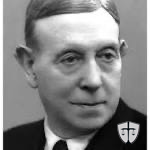
Fulton was an interesting character. When he joined Yale’s faculty in 1929 he was only 30 years old, making him the youngest professor at the school. Under his leadership, Yale School of Medicine became one of the most prominent research laboratories in the world, and the first in the country to conduct research on primates. It was one of those primate experiments that caught the attention of Moniz.
Fulton and Jacobsen had found that removing the frontal lobes of a pair of chimpanzees made them calmer and more cooperative. When the chimps were given tests to perform, it seemed as if they no longer cared about earlier mistakes they’d made or felt frustration when they failed. In settings where the apes had previously become frustrated and aggressive, they now seemed indifferent to their own mistakes. In Fulton’s own words: “It was as though they had joined a happiness cult.”
Moniz was inspired by these findings, and believed that it was possible to transfer this experiment from the apes to treatment for humans.
It’s important to note that Moniz was not some undistinguished quack. He had pioneered the use of injecting radiopaque dyes to allow surgeons to visualize the brain, which provided a significant advancement for understanding and operating on the brain. Moniz delivered numerous lectures and authored papers on the subject, and he was nominated for, but did not win, the Nobel Prize for this achievement.
When Moniz learned of Fulton and Jacobsen’s chimp experiments, he became convinced that by simply removing white matter fibers from the frontal lobe, a patient’s mental state would improve. And so, armed with an unusually robust self confidence, Moniz, who was not himself a surgeon, began a collaboration with neurosurgeon Pedro Almeida Lima to operate on the frontal lobes of 20 patients who suffered from schizophrenia, anxiety and depression.
The first ten surgeries were done by simply injecting absolute alcohol into the brain cavity to destroy the frontal lobe. Later, the two men developed a more “precise” method of targeting the frontal lobe, using a “leucotome” - a long instrument with a steel strip for severing the connections of the frontal lobes.
In the first group of patients, Moniz reported a total of seven cures, seven improvements, and six people who were unchanged. After treating another 40 patients, he claimed, “Prefrontal leukotomy (as he called it) is a simple operation, always safe, which may prove to be an effective surgical treatment in certain cases of mental disorder.”
Moniz had his critics, people who claimed that he understated complications from the procedure, that he didn’t document his work adequately and that he didn’t follow up with his patients for a long enough period of time. Nevertheless, in 1949 he received the Nobel Prize “for his discovery of the therapeutic value of leucotomy in certain psychoses.”
The procedure made its way to America in the person of Walter Jackson Freeman, a neurologist and one of the founders of the American Board of Psychiatry and Neurology. While Moniz invented the procedure, it’s really Freeman who deserves the credit - if credit is deserved - for making lobotomy a widely recognized psychiatric treatment.
Teaming with neurosurgeon James W. Watts, Freeman developed the Freeman-Watts prefrontal lobotomy method. By 1942, they had lobotomized more than 200 patients - with promising, but mixed, results.
In an article on the history of lobotomies, Norwegian author Oivind Torkildsen tells us that according to Freeman’s own account, “lobotomy is based on an idea that came to him while cutting ice for his drink with an ice pick. The technique was named transorbital lobotomy. The objective was to sever the connection between the prefrontal cortex and the thalamus by using a thin surgical instrument - an orbitoclast - to cut through the thin layer of bone above the eye socket. A small hammer was used to drive the instrument into the brain. According to Freeman, the operation could be performed without general anaesthetic, and no surgical experience was required. Strictly speaking, it was not even necessary to use a qualified doctor.”
So there you have it: anyone with an ice pick and a hammer could drill into someone’s skull and fix what ailed them. If this sounds like madness, it’s because it was. Nonetheless, according to Torkildsen, in 1949 alone more than 5,000 lobotomies were performed in the United States, despite a 14% mortality rate. But it wasn’t just the deaths that made this a particularly gruesome operation. Many patients were left permanently damaged from lobotomies.

Perhaps the most famous victim of this “trusted science” was Rosemary Kennedy, the younger sister of John F. Kennedy. As a child, Rosemary supposedly had developmental delays, and as an adult she was “becoming increasingly irritable and difficult.” In 1941, when Rosemary was 23, her father, Joseph Kennedy, took her to Freeman for a lobotomy. The results were disastrous. Rosemary couldn’t walk for years afterward, she never regained the ability to speak intelligibly and she had the mental capacity of a three-year-old. Rosemary was separated from her family, sent to live in an institution in Wisconsin for the rest of her life, finally passing away in 2005 at age 86.
Today we consider frontal lobotomies a barbaric act from an unenlightened time. But clearly there was a time when they were accepted by a segment of the medical science community, so much so that the Nobel committee awarded the prize to its inventor.
It’s tempting for us, in 2025, to look back at those “rubes” from a bygone era and wonder why they couldn’t see that they were engaged in an obviously flawed practice that was doing so much harm. But are we so arrogant in our own “enlightenment” to believe that we couldn’t make a similar mistake?

Just five years removed from the pandemic, the public health policies we put in place for Covid aren’t holding up too well. The “science” told us that the virus had to be from a Wuhan wet market, not from a leak in the virology lab in the same town. The “science” told us to quarantine our entire country, to shutter our economy, to close schools, churches, offices and all social events. The deleterious aftershocks of those decisions are still being felt. With schools being closed for so long, kids fell behind grade-level in math, science, reading, basically everything. And while the impact on mental health and social well-being is harder to quantify, there is an increase in reported cases. The virus was horrible; our response to it, “guided by the science,” was worse.
And now another debate rages in our public square, as we’re told to trust the science when it comes to so-called “gender-affirming care” for confused young people who are uncomfortable about their bodies, their place in the world and how to navigate a culture in rapid flux. We’re told that these treatments - puberty blockers, hormone replacement drugs, gender reassignment surgeries - are the humane way to care for people with “gender dysphoria.”

The debate over gender-affirming care has turned very partisan, which is a shame because these treatments have irreversible, life-altering effects. Are we really sure this is the way to proceed? The legitimacy of these practices are being called into question.
In England, a judge has upheld an indefinite ban on puberty blockers for children with gender dysphoria after a finding that there was an unacceptable safety risk in prescribing these medications. The National Health Service, the governing body that runs British health care, stopped prescribing puberty blockers at gender identity clinics because there wasn’t enough evidence about the risks and harms of the treatment.

The judge who upheld the ban, Justice Beverly Lang, said a review commissioned by the Health Service found “very substantial risks and very narrow benefits” to the treatment. She concluded that gender “care” is an area of “remarkably weak evidence” and young people have been caught up in a “stormy social discourse.”
Other European nations are beginning to take a similarly cautious approach to the issue. For example, Sweden’s National Board of Health and Welfare determined that the risks of puberty blockers and hormone treatments “currently outweigh the possible benefits” for minors. But that caution has not taken root in certain sectors of the American medical community.
In the United States, more adolescents with no history of gender dysphoria are being treated at gender clinics than ever before. An analysis of insurance claims found that nearly 18,000 American minors began taking puberty blockers or hormones from 2017 to 2021, with the number rising each year. And in fact, the number of these “gender clinics” has ballooned from just a few 10 years ago to more than 100 today.
So why this sudden increase in an issue most of us had never heard of just a few years ago? Why the mad rush to dismiss thousands of years of Judeo-Christian understanding about the nature of men and women? Is the transgender trend really just a social contagion, spread by the internet and enabled by questionable medical professionals? It certainly seems that way. What’s necessary here is for the scientific method to be applied to this issue.
Science is meant to be the neverending search for truth. Properly practiced, science is a method for acquiring knowledge by following a procedure that seeks to prove a hypothesis through rigorous and repeatable experiments. When the practice of science is rushed, or falls into the hands of partisan functionaries, or gets caught in the honey trap of money, that’s when it fails us.
Is “science” failing us on this issue? Once upon a time, lobotomies seemed to offer a rather simple solution to a frightening human condition. We know better now. Is it so hard to believe that one day, a future generation will look back at our “enlightened” era and see “gender care” - puberty blockers and gender surgeries - as heavy-handed, barbaric, irreversibly damaging procedures practiced on confused and vulnerable people?
BY Kevin Diehl


Spot on here, as our friends across the pond like to say. On the money and razor-sharp, Kevin. Keep speaking the Truth, Brother. Blessings.